
Sharps disposal
What happens to sharps and medical waste after collection
An overview of how sharps and medical waste is handled, transported and disposed of after it leaves your property.
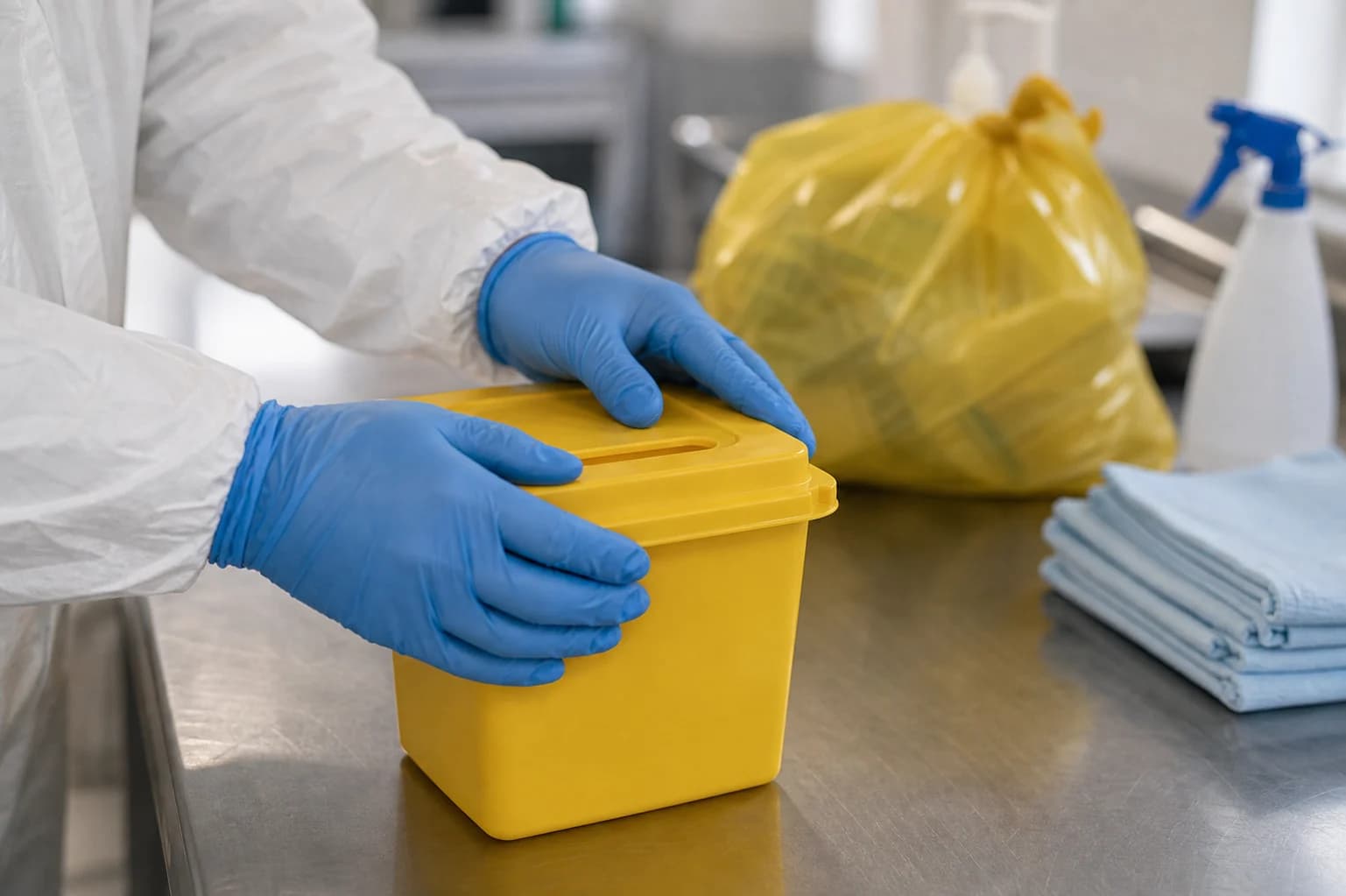
After sharps or medical waste are collected from your property, they enter a controlled chain of handling designed to protect public health and the environment.
The first step is safe containment at source. Sharps are placed in rigid, puncture-resistant containers. Clinical waste is bagged in colour-coded sacks according to waste type. This segregation happens where the waste is produced.
The collector or disposal partner should be authorised for the waste type and use suitable transport for the safe movement of hazardous materials.
At collection, a waste transfer note is created. This document records what was collected, when, from where, and by whom. It creates an auditable trail from producer to disposal.
The waste is transported to an appropriate treatment or disposal facility. Depending on the waste type, this might involve incineration, autoclaving or other approved treatment methods.
After treatment, any remaining material is disposed of through landfill or other approved routes. The facility issues documentation confirming that the waste has been processed according to environmental regulations.
As the waste producer, you should keep your waste transfer notes and disposal documentation for at least two years. These records may be requested by environmental health officers or other regulators.
Using a reputable waste collection service helps ensure these steps are handled correctly. Always ask what documentation you will receive.
Need help with this?
If you are dealing with a situation covered in this guide, call us for advice or to arrange a visit.
Related services
Services connected to this guide
Common situations